When it comes to wastewater and sewage management, the type of pump you choose plays a crucial role in ensuring smooth operation and preventing blockages. Two common types of pumps used in these applications are vortex pumps and macerator pumps. While both serve to transport waste and liquids, they differ significantly in their mechanism, application, and performance. This article explores how each pump works, when to use them, and the advantages and limitations of both.
How Vortex Pumps Work
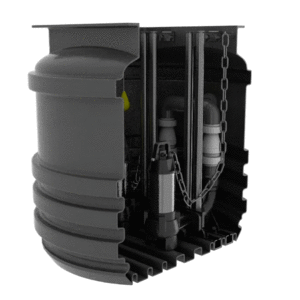
Vortex pumps, also known as recessed impeller pumps, operate by creating a vortex within the pump chamber. The impeller is set back from the pump housing, which reduces direct contact between the impeller and the waste material. As the impeller rotates, it generates a swirling motion (vortex) that pulls the waste through the pump and discharges it.
This design allows larger solids and fibrous materials to pass through without coming into direct contact with the impeller, minimizing the risk of clogging and wear.
How Macerator Pumps Work
Macerator pumps, on the other hand, use a cutting mechanism to break down solids before pumping the waste. These pumps are equipped with rotating blades that chop solid materials into fine slurry, which can then be easily transported through small-diameter pipes. This grinding action ensures that even tough, fibrous materials are reduced to a manageable size.
When to Use Vortex Pumps
Vortex pumps are best suited for applications where large solids or debris are present and where clogging is a primary concern. Common use cases include:
- Municipal sewage systems
- Industrial wastewater handling
- Agricultural waste management
- Applications with large or irregular solids
These pumps excel in situations where the waste stream contains rags, fibers, and other challenging materials that could block conventional impellers.
When to Use Macerator Pumps
Macerator pumps are ideal for environments where the waste must be transported through narrow pipes or over long distances. Typical applications include:
- Domestic and commercial bathroom installations
- Marine and RV waste systems
- Waste transfer over long horizontal or vertical distances
- Environments where solid waste needs to be reduced to a fine consistency
These pumps are often used in situations where installation space is limited and the plumbing infrastructure requires finely processed waste to prevent pipe blockages.
Advantages and Limitations of Vortex Pumps
Advantages:
- High resistance to clogging due to recessed impeller design
- Ability to handle large, irregular solids
- Reduced wear and maintenance
- Ideal for heavy-duty and high-volume applications
Limitations:
- Less efficient than macerator pumps in terms of energy consumption
- Larger size and heavier build
- Not suitable for situations requiring fine particle breakdown
Advantages and Limitations of Macerator Pumps
Advantages:
- Efficient transport through small-diameter pipes
- Ability to handle long-distance waste transfer
- Compact design suitable for tight spaces
- Ideal for applications requiring solid breakdown
Limitations:
- Susceptible to wear from abrasive materials
- Requires more maintenance due to cutting mechanisms
- Increased energy consumption from the grinding process
- Less effective at handling large, non-biodegradable solids
Choosing the Right Pump for Your Needs
When selecting between a vortex pump and a macerator pump, consider the following factors:
- Type of Waste: If your system deals with large solids, fibrous materials, or irregular debris, a vortex pump is the better choice. For finer waste that needs to pass through narrow plumbing, a macerator pump is more suitable.
- Distance and Pipe Size: For long-distance transfer through small pipes, macerator pumps are more efficient. Vortex pumps work best for shorter distances with larger pipe diameters.
- Maintenance Requirements: Vortex pumps generally require less frequent maintenance due to fewer moving parts. Macerator pumps, while effective at breaking down solids, may need more regular servicing due to the wear on cutting blades.
- Energy Efficiency: Vortex pumps are often more energy-efficient for bulk handling, whereas macerator pumps consume more power due to the grinding action.
- Space Constraints: If space is a concern, the compact design of a macerator pump may fit better within confined areas.
By understanding the operational differences and the specific advantages and limitations of each pump, you can make an informed decision that ensures reliability and efficiency for your wastewater management needs.